Reverse engineering project
Carabiner Pen Recreation
This project focused on product recreation through reverse engineering. I fully modeled a commercially manufactured carabiner pen in Onshape, documented it with a full drawing set, and physically validated the design through 3D-printed replacement components.
Overview
Reconstructing a manufactured product from geometry to function.
The goal of this project was to reverse engineer a commercially manufactured carabiner pen and recreate it as a fully documented digital model. Rather than only matching the outer shape, the work involved rebuilding the internal parts, assembly relationships, and functional interfaces required for the pen to operate like the original product.
Technical highlights
Component-level reconstruction
Modeled the individual parts of the pen in Onshape by reverse engineering the geometry, proportions, and mating features needed for the assembly to function.
Drawing set and documentation
Created a full drawing set so the project was not only modeled, but also documented in a way that supports manufacturing, communication, and future reproduction.
Physical validation
3D printed replacement components and assembled the design physically to validate the model against real use rather than stopping at a digital replica.
Why it mattered
The finished result was a fully functional replica that behaved like the original pen, but with one practical advantage: replacement parts or complete new assemblies could now be produced quickly and cheaply in-house.
From a mechanical perspective, this project demonstrates CAD modeling, reverse engineering, design documentation, and prototype validation through physical assembly and use.
Media and artifacts
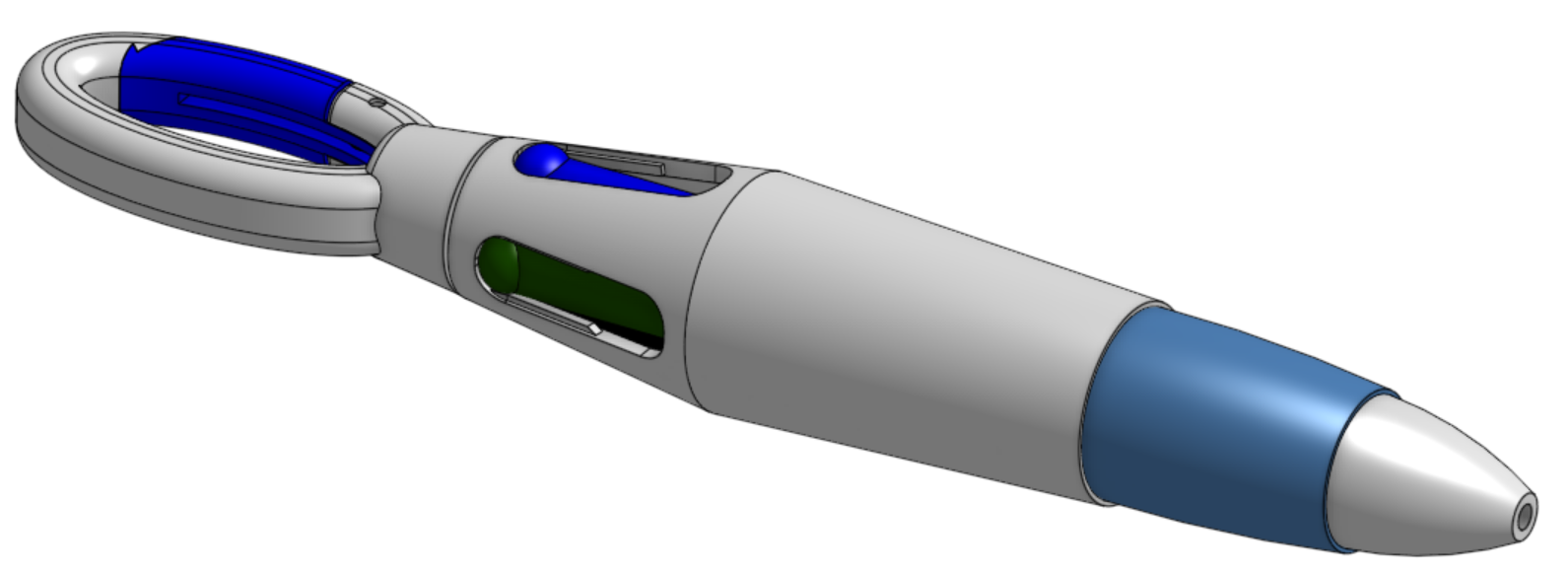
The completed pen assembly, showing the recreated overall form and the integrated functional geometry needed for it to operate like the original product.
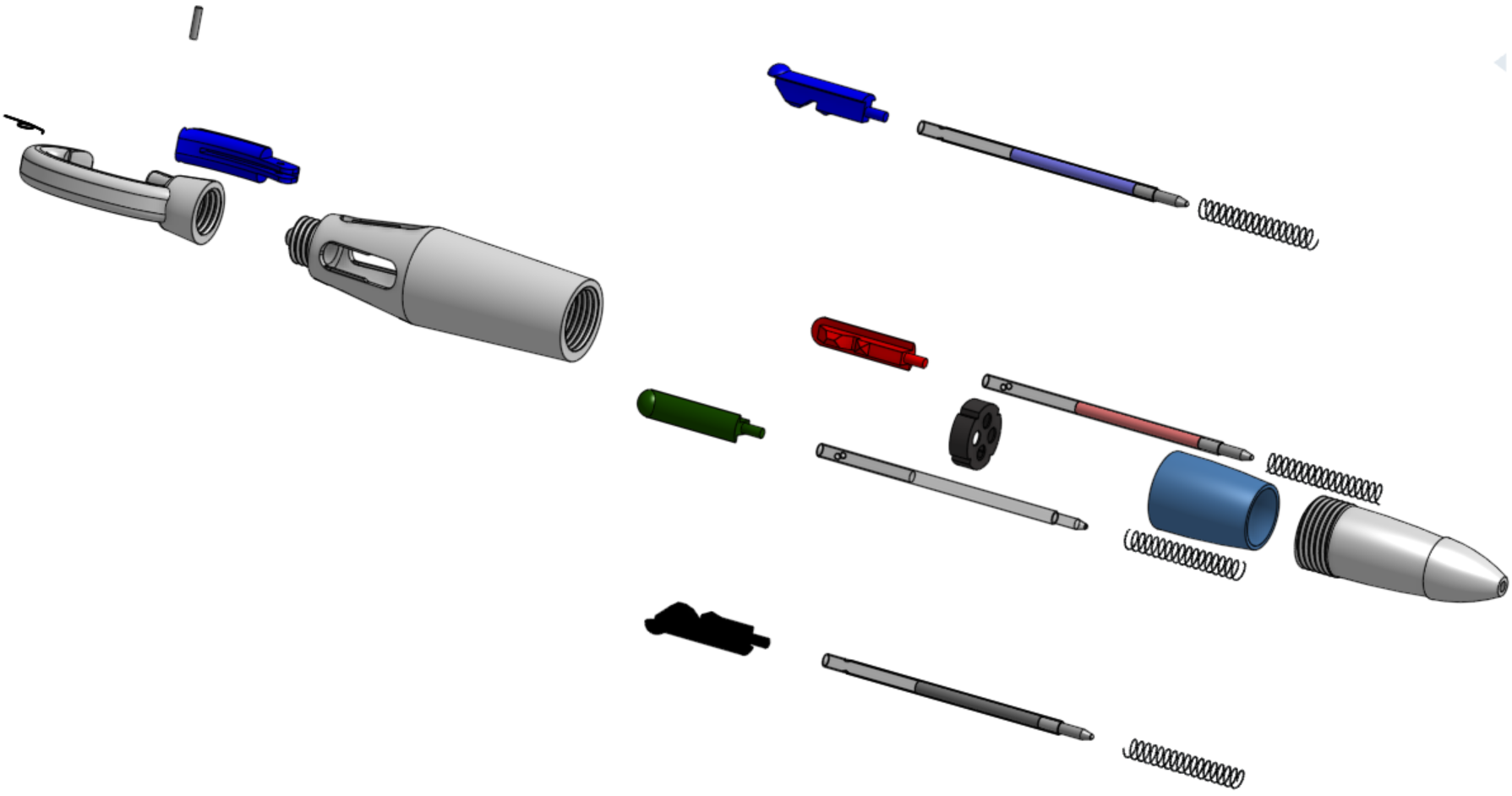
The exploded view makes the part breakdown, assembly relationships, and functional stack-up much easier to understand at a glance.